Prepared for Nick Kyrgios · The Legacy Project · September 2026
“I’m a team player.”
You said it at the ATP Cup in 2020, and tennis never built you a place to be one. This page is about 2027 and what comes after it: the season, the stories, a structure at home, and a stake in the league. Not what you do next year, but what you look back on at fifty.
Nick Kyrgios, ATP Cup, January 2020 · Ten sections, about seven minutes
Mixed doubles, the last seconds · Season 2
■ The proposal
Play 2027
A full season on an INTENNSE team, on the commitment you already have.
Tell the stories
An off-court series on your teammates and the families, co-produced with the league, with you as its creator.
Build Oceania
First right of refusal to lead INTENNSE in Australia, New Zealand and the Pacific, starting with festivals after the 2027 season.
Own part of it
Two per cent of INTENNSE as a foundational member, earned in three parts.
A gender-balanced Professional Team Tennis League
Eight playing weeks in the middle of the summer. Switch the view to see the same season against the American sports year, or against the college calendar our players come from.
Where our players have been on the tour, and where they sit on the rating that covers everyone. The orange rule is where tennis starts paying for itself.
UTR: our players against the tour’s
Down to the wire; Sudden Death
Two Arcs that finished a point apart. Each clip picks up in the closing minutes, with the full Arc a click away.
Sudden death, level at 142
The final three minutes of Freeze v Rise, 20 June. The clock runs out with the teams tied, and the next point decides it: 143–142.
Match Center ↗One point, one minute left
The final minute of Outriders v Inferno, 25 June. It finishes 150–149, with the winner’s cheque on court.
Match Center ↗Two points that flipped the score
One from the net, one from the low camera. Each is about twenty seconds, and each one changed the scoreboard.
Low angle, the final Bolt
The last play of the Bolt from the low camera: a two-pointer that takes the Sting from 86–87 to 88–87. 22 seconds.
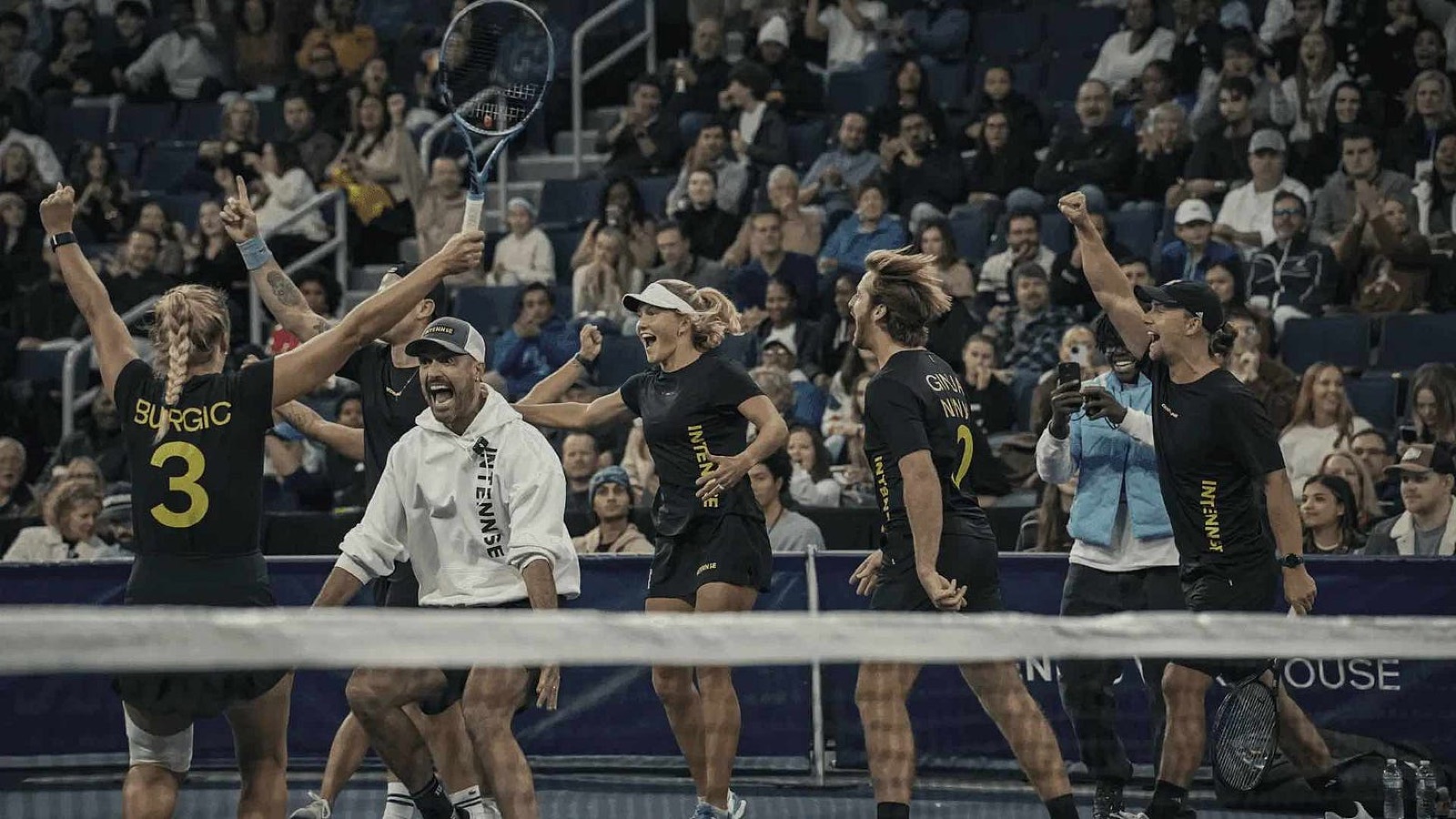
Match Center ↗Mixed doubles, last seconds
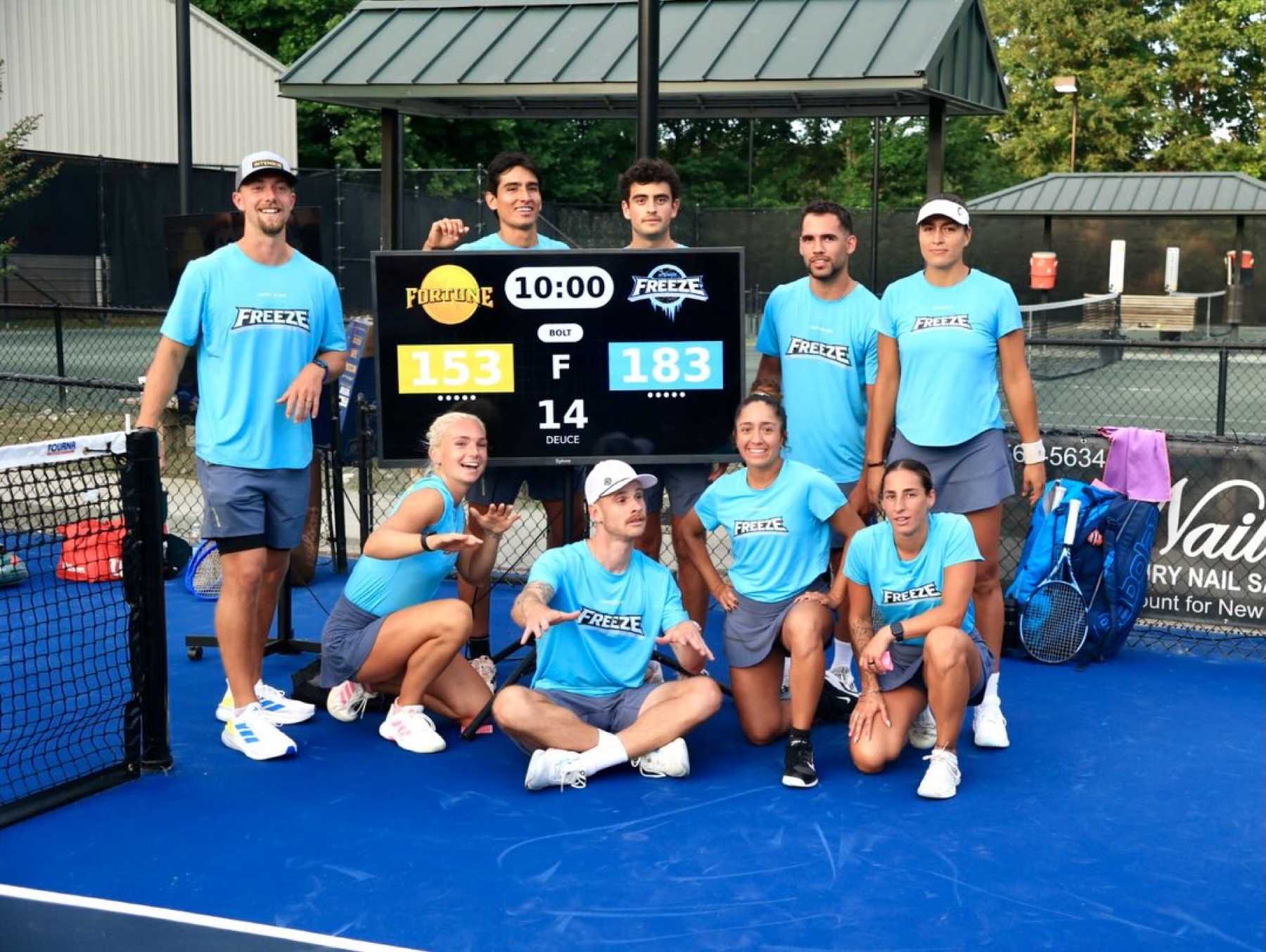
Dalayna Hewitt’s two-pointer in the closing seconds against Rise, 15 July — 156 to 158, level. 18 seconds.
Match Center ↗■ The question
What does fifty-year-old Nick look back on?
Most players answer it the same way: an academy, a commentary seat, a foundation with their name on the door. We don’t think that is yours. For ten years you have said, out loud and in public, what is wrong with how this sport treats the people who play it. You were right about most of it.
What the sport never gave you was anywhere to take the argument. There is no mechanism in the tour for a complaint to become a change, so the only tool left was noise, and noise got attention without getting resolution. The Legacy Project is the other tool: a structure that answers the things you said, built with you inside it.
You have done this once already
In January 2020 you pledged $200 for every ace to bushfire relief. Other players copied it, and it grew into the Rally for Relief night that put Djokovic, Nadal, Federer and Serena on the same court. You said it at the time: “It’s bigger than tennis.”
You named a problem, put something of your own on the line, and the rest of the sport followed you. This time what they follow you into is permanent.
■ In your own words
Five things you said were wrong, and what answers each one.
“When I’m playing for myself, I don’t know, I find it hard to get up… Something about these guys and playing for them brings it out in me. I just love – I’m a team player.”
ATP Cup · January 2020
A team, every week
Six players, one roster, one score. Every point you win is a point for five other people, and every point they win is yours.
“We’re traveling seven, eight months a year. I barely see my family, my friends.”
December 2023
One city, in residence
Eight weeks in one place in 2027. From 2028 every team plays out of a home market of its own. You arrive once and you leave once.
“It’s absurd, really, the amount of travel we do, considering we don’t even get paid what we are supposed to get paid, as well, which is a joke.”
Brisbane · January 2025
A wage, and room to grow it
In 2026 every INTENNSE player was an employee, on a $40,000 base with up to $70,000 in total over the season. That is the foundation. As teams move into home markets from 2028 and earn there, pay is built to grow with the league: a professional living for the players prize money was never going to support.
“We’re the only sport in the world that doesn’t have a players’ association.”
March 2025
A voice, and care, from day one
INTENNSE players have had a players’ council since 2026, with a formal say in how the league runs. Mental health was on the table from the first day, with support available to every player all season long. A foundational member helps decide what comes next.
“Tennis has done a really poor job with accepting personalities in the past.”
January 2022
A format built for the crowd
A clock, music between points, coaches on court and a crowd that is allowed to be loud. The personality isn’t tolerated here. It is the product.
■ On the same side
Women and men, one clock, one score.
“It’s just a great event to have, an event where females and males come together as one to represent their nation.”
Nick Kyrgios, on the United Cup · December 2022
Every INTENNSE team is three women and three men. They play the same Arc, on the same clock, and every point goes into one team score. A woman’s point is worth exactly what yours is, because there is only one match.
Why this matters for the story
Most of what tennis argues about when it argues about men and women comes from running two separate products and then comparing them: who plays longer, who draws more, who is worth what. Put them on the same side of the net and most of that argument has nothing to stand on.
The women on your team would be winning your matches with you, every weekend, in front of the families in the stands.

■ 2027, on court
You play the season.
The playing side is the page you already have: eight weeks in Atlanta, every one of your team’s Arcs, the community programme, and residence for the length of the season. Nothing on this page changes it. Everything on this page is built on top of it.
■ The off-court job
You tell their stories.
Every roster in this league is full of players living a version of what you lived: years on the road without covering their costs, a sport that had no place for them after college, a tour that never asked who they were. During the 2027 season your second job is to find those stories and tell them. You are the interviewer and the thread. They are the subject.
What the series could cover
The money
Players with career highs between 130 and 1,800 who have never broken even, and what a salary changes.
Straight from college
Players who went from an NCAA final to a professional roster in a few weeks, without choosing between a degree and a career.
The same side
The women on your team, telling what it is to win a match with the men rather than be compared with them.
Home
What a season in one place means to players who have spent years in airports.
The families
Parents and juniors at the community events, and what the pathway did to them or for them.
Why you, and how it would be made
You have already done the work: Break Point, Good Trouble, and commentary for ESPN, the BBC and TNT. You know how to get people to say the true thing on camera, because you have done it yourself.
The series would be co-produced with the league, with you credited as its creator and a defined share of what it earns. We would rather settle the rights and the numbers in the room than put them on a page.
■ The families
Show them a different way through the sport.
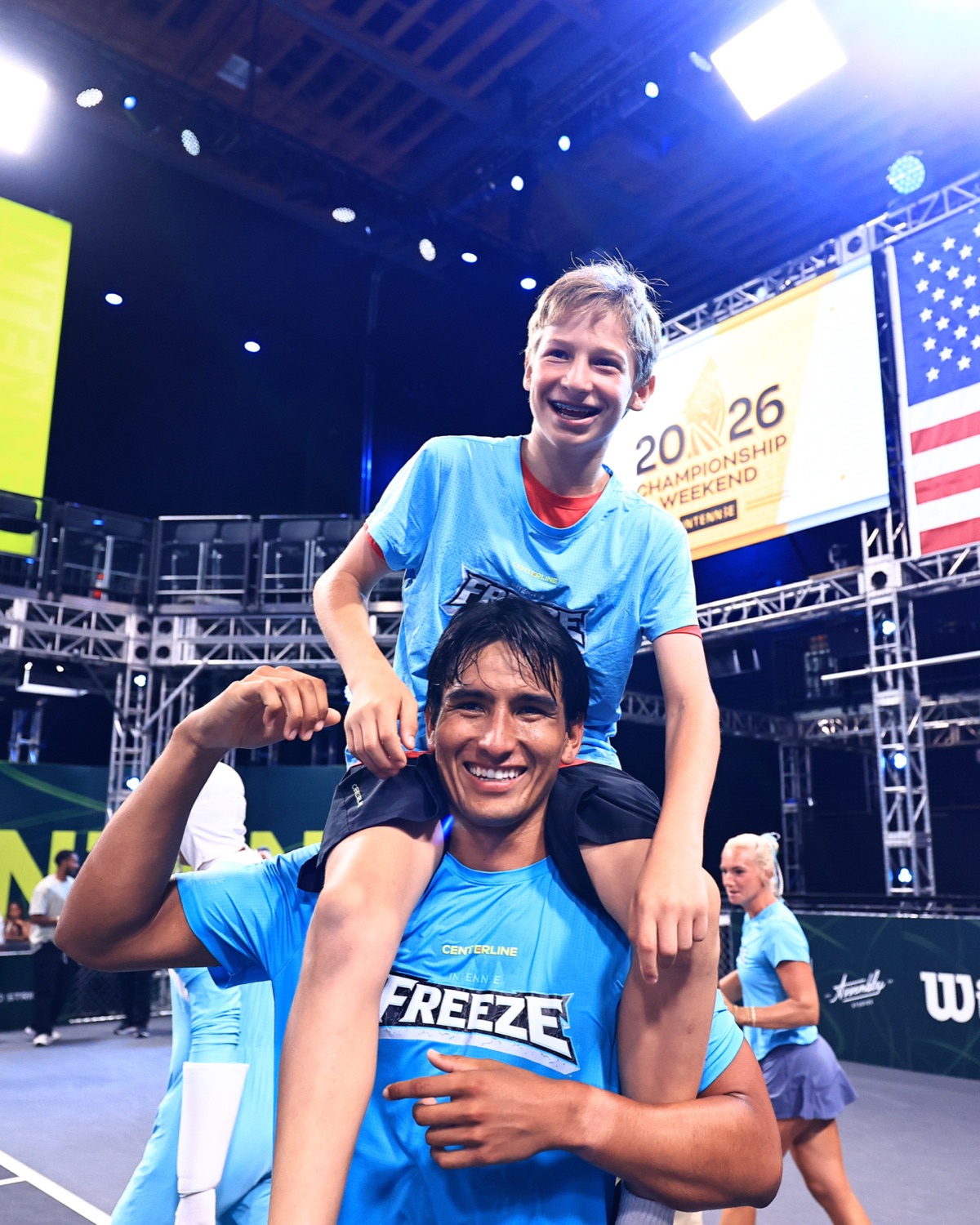
The families at the community events are making decisions about their kids’ tennis right now: which academy, how many hours, whether to keep going. A player who has been through all of it, and says what he thinks, is worth more to them than any clinic. Your appearances would be real ones, with real families, working through what a good journey through sport looks like. The series films them.
Junior
Clinics and camps in the team format, where the result belongs to the group.
School and club
Leagues on the same rules, three and three, one score.
College
A degree that no longer costs a professional career.
The team
A drafted, salaried place, in front of the home crowd.
■ Home
First right of refusal on Oceania.
INTENNSE grows through regional partners who run the game in their own part of the world: the events, the leagues and the local business, with the league’s format, rules and support behind them. We would like the first right to build it in Australia, New Zealand and the Pacific to be yours.
What the regional partner holds
- Events
- INTENNSE events and festivals across the territory
- Leagues
- Club and state leagues on the INTENNSE rules, with the associations that already run tennis there
- Revenue
- The entry fees, local sponsorship and event revenue the territory earns
- Teams
- A say in the charters sold in the territory
What the right asks
- Capital
- A committed raise by an agreed date, after the first festival cycle
- Structure
- A properly formed entity, agreed with the league
- Partners
- Tennis Australia and the state associations brought in from the start, not told afterwards
- 2027
- The season played and the series delivered
Why now, and where it starts
Some of Australia’s state associations have already come to us. The states are also building mixed team tennis of their own: Victoria, New South Wales, South Australia and Queensland meet in a State vs State team event in Melbourne this December. Western Australia isn’t in it, and Tennis West is one of the associations that has approached us.
Canberra is the other obvious start. Tennis ACT reached more than 44,000 participants last year, up 18 per cent, and the Canberra International already runs a festival of tennis around its week.
Tennis Australia has a new chief executive, who started in August and is still deciding the shape of his organisation. That is the moment to bring the national body in, as a partner, before it hears about any of this from anyone else.
The appetite for mixed team tennis is not new either. The Hopman Cup ran in Perth for thirty-one years, and the United Cup is still there.
■ After the season
Festivals, in the Australian spring.
The US season ends in early August. Between the football grand finals and the start of the Australian summer there is a clear window, from mid-October to late November, that belongs to nobody in tennis. That is where an INTENNSE festival goes: an exhibition Arc with you and league players alongside local players, a community day, and a stop for the series. Three in the first year, starting with Canberra and Perth.
Who could build it with you
The people we would want next to you in Oceania are the ones who already carry the game there on their own terms: national-team captains who still play team tennis in their local leagues, champions who stepped away from the tour and went home, doubles champions from both sides of the Tasman, and the people building a place in the sport for players it has left out. We would rather choose them with you than name them here.
■ Foundational member
Two per cent of INTENNSE, earned in three parts.
Equity in the league itself, the same order as the people who built it from the start, and it is earned by doing the things on this page.
The player
The 2027 season played in full: every Arc and every community commitment.
The storyteller
The Legacy Project series delivered.
The builder
An INTENNSE Oceania agreement signed, with the capital committed.
Terms are summarised for discussion and are not an offer. The detail would be set out in a founder agreement.
■ The legacy
“It’s bigger than tennis.”
You said it in 2020, and you were right. A team where your point and hers count the same. Players paid to play. A season at home. Families shown a better way through the sport. And a structure in your part of the world that you built. That is what fifty-year-old Nick could look back on.
The season
2027, on the commitment you already have.
The series
Your peers’ stories, told by you.
Oceania
The first right to build it, and the festivals that start it.
The stake
Two per cent of the league, as a foundational member.